’Hurricane’ exercise scenario tests emergency skills

ALFRED, Maine - How do you know your response to a disaster will work? By taking part in an exercise designed to gauge the readiness of emergency management agencies and their volunteers to a Category 2 hurricane.
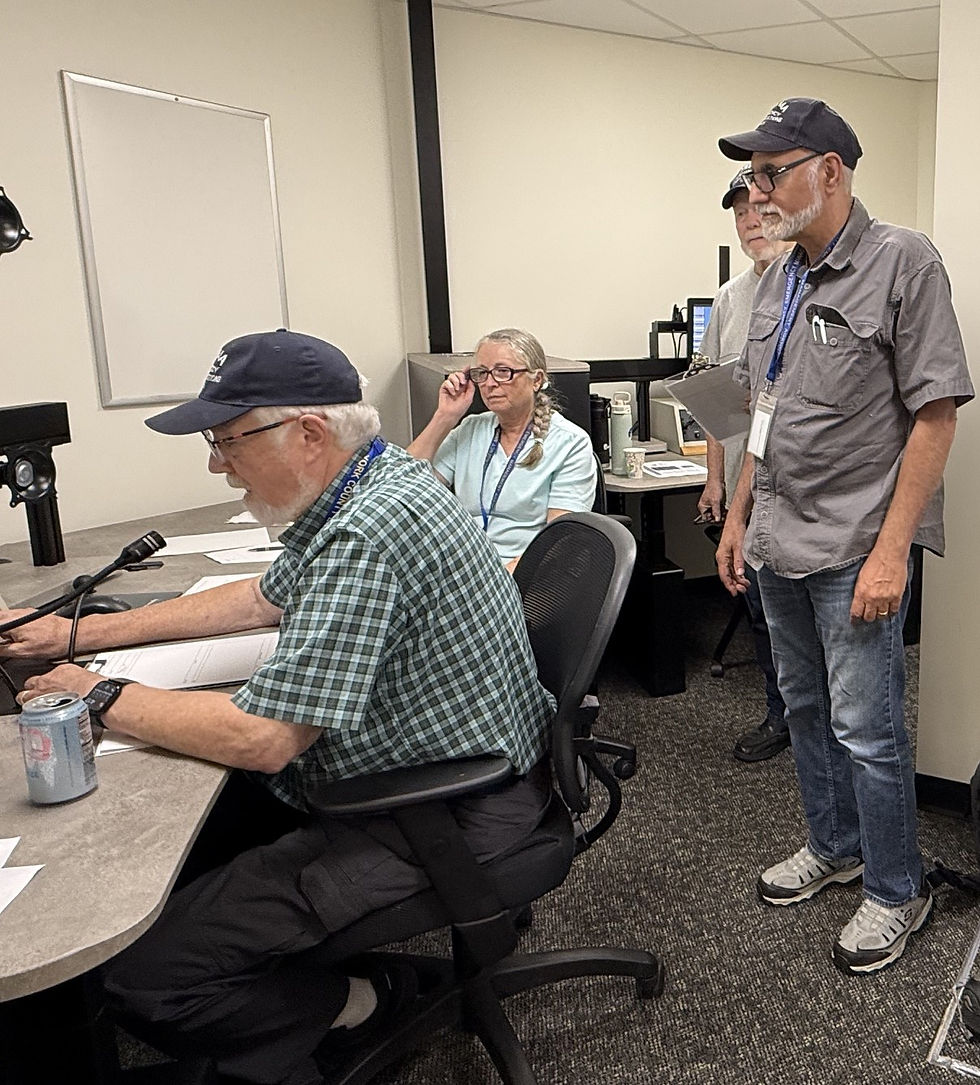
There was no actual hurricane on Wednesday, Sept. 16. But York County Emergency Management Agency, most other county EMAs in Maine, Tribal emergency managers, the Maine Emergency Management Agency and their counterparts at the Federal Emergency Management Agency took part in the Maine Strong 2026 Functional Exercise, sharpening their skills in response to multiple scenarios that can and do happen in real life.
More than 30 people – staff and volunteers took part in the exercise.
“It tested our planning and response,” said YCEMA Deputy Director Megan Arsenault.

She said there were veteran volunteers on hand – but also many who were relatively new to the Emergency Operations Center, so it gave them a good look at what takes place when bad things happen.
“We tested our usual operations: how to set up the Emergency Operations Center, how to notify the public, how to support shelter operations and how to prioritize power restoration,” among other scenarios, said Arsenault. “Then we pushed ourselves to the limit – what to do if cell phones, internet, satellite phones and public safety communications went down. By the end of the exercise, we were depending on ham radio.”
That in itself, she said, is a reason to encourage local emergency department personnel to have backup emergency communications like ham, even though it may never be needed.
The scenario saw “Tropical Storm Kyle” develop off the British Virgin Islands on Sept 8, and make its way east of the Bahamas as a category 4 hurricane. It became a Category 3 off the Carolinas, and the imaginary hurricane made landfall on Martha’s Vineyard as a Category 2, with winds from 96 to 110 miles per hour before landing at Boothbay Harbor, also as a Category 2.
The mock hurricane, according to the scenario, saw gusts up to 96 miles an hour in Portland, produced a storm surge of more than five feet in Downeast Maine and flash flooding statewide. Late season tourists were stranded in Bar Harbor and Acadia National Park, and there was flash flooding inland all over Maine in this mock exercise.

Objectives were to evaluate how the multiple Emergency Operations Centers coordinated and shared critical information both with each other and their state and federal counterparts, conduct preliminary damage assessments to support response, coordinate public messaging, track logistics requests and more.
Arsenault was pleased with the outcome.
“Our procedures and plans worked really well,” she said. “We didn’t find any critical gaps, but small things we can improve on. The exercise showed us where we need to focus. We really learned a lot.”